Accelerating the Introduction of Resilience Testing using Shadow Chaos Engineering
Master Thesis Defense
October 15, 2024
Agenda
- Motivation
- Basics
- Method
- Literature
- Research Questions
- Shadow Chaos Engineering
- Demonstration
- Conclusion
- Future Work
Motivation
Environment
Motivation
Relevance
- Amazon Web Services partial outage in North Virginia [3]
- Typo during debugging
- 4 hours downtime
- Estimated 150 Mio. USD damages
Amazon explained the prolonged restart by saying the two subsystems had not been completely restarted for many years.
Basics
Methods
- Resilience testing
- Increase stability
- Reduce downtime
- Chaos Engineering
- Simulate technical issues in production
- Automated
- Regular
Chaos Engineering is the discipline of experimenting on a system in order to build confidence in the system’s capability to withstand turbulent conditions in production. [2]
Methodology
DSRM
Design Science Research Method according to Peffers et al. [4]:
- Problem identification and motivation
- Objectives of a solution
- Design and development
- Demonstration
- Evaluation
- Communication
Literature
Literature Research Questions
Systematic literature review based on LRQs concerning
- Definition
- Deficits
- Derived methods
… of chaos engineering
Literature
Results
Definition:
Deficits:
Derived methods:
- Testing on digital twin instead of production system [7]
Research Questions
RQ1
- How can the method of chaos engineering be extended by mirroring a productive system in order to minimize risk of catastrophic failure when introducing chaos engineering?
RQ2
- When minimizing catastrophic failure using a new method, which aspects of the method can be automated?
Shadow Chaos Engineering
Previous Work
- Conventional Chaos Engineering
- Risk of production outages
- Previous work: Testing on digital twin [7]
- Reduces risk of outages in production
- Problem: Diverging environments
- Limited transferability of results
Shadow Chaos Engineering
New Method
- Copy of production environment
- Created on demand, short-lived
- Close to production
- Chaos Experiment on Shadow Environment
- Failure occuring:
- No impact on production
- Further evaluation possible
- New experiments with patched system
- No failure occurring:
- Experiment in production
- Confidence in production environment
Shadow Chaos Engineering
Concept

Shadow Chaos Engineering
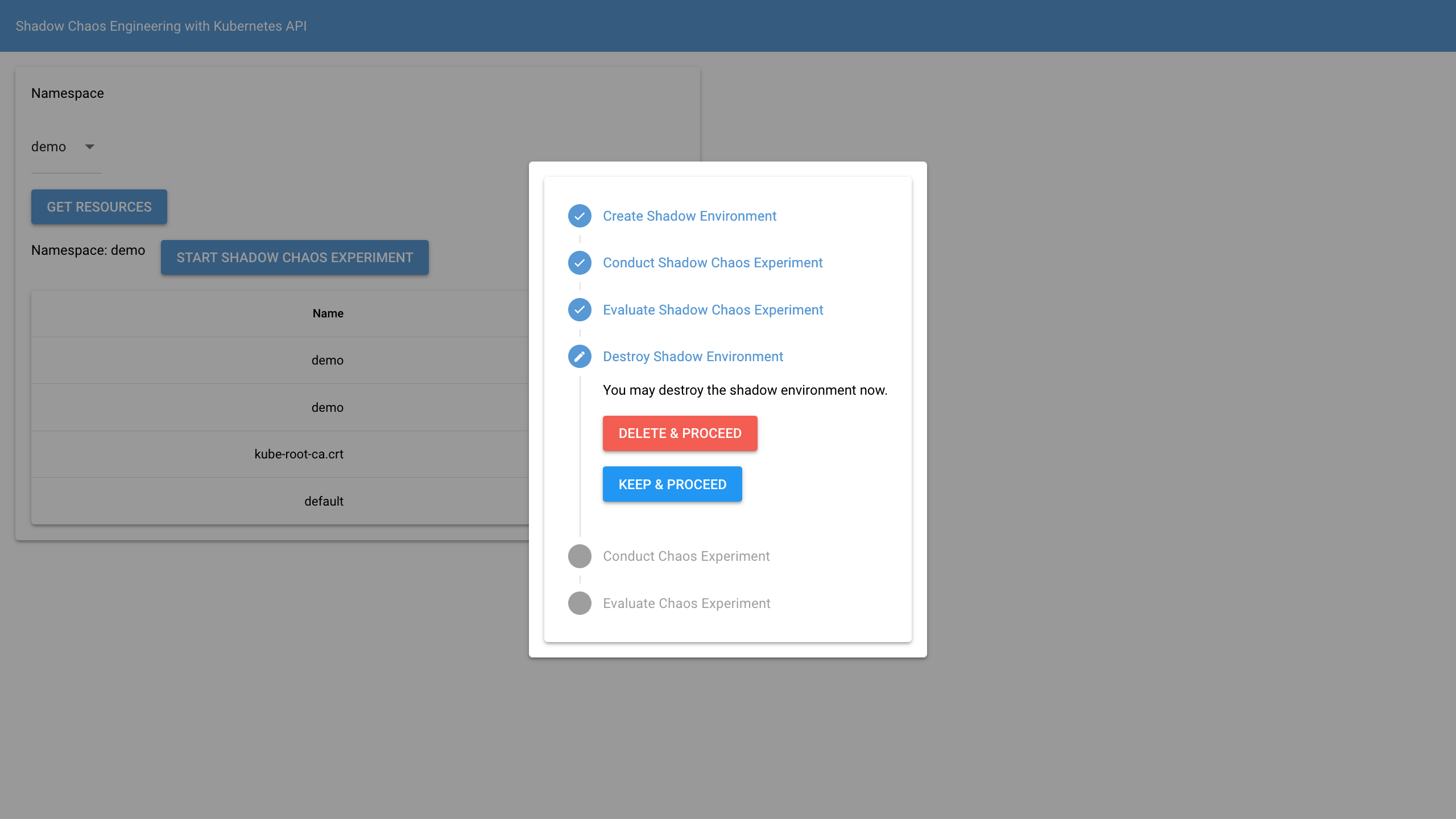
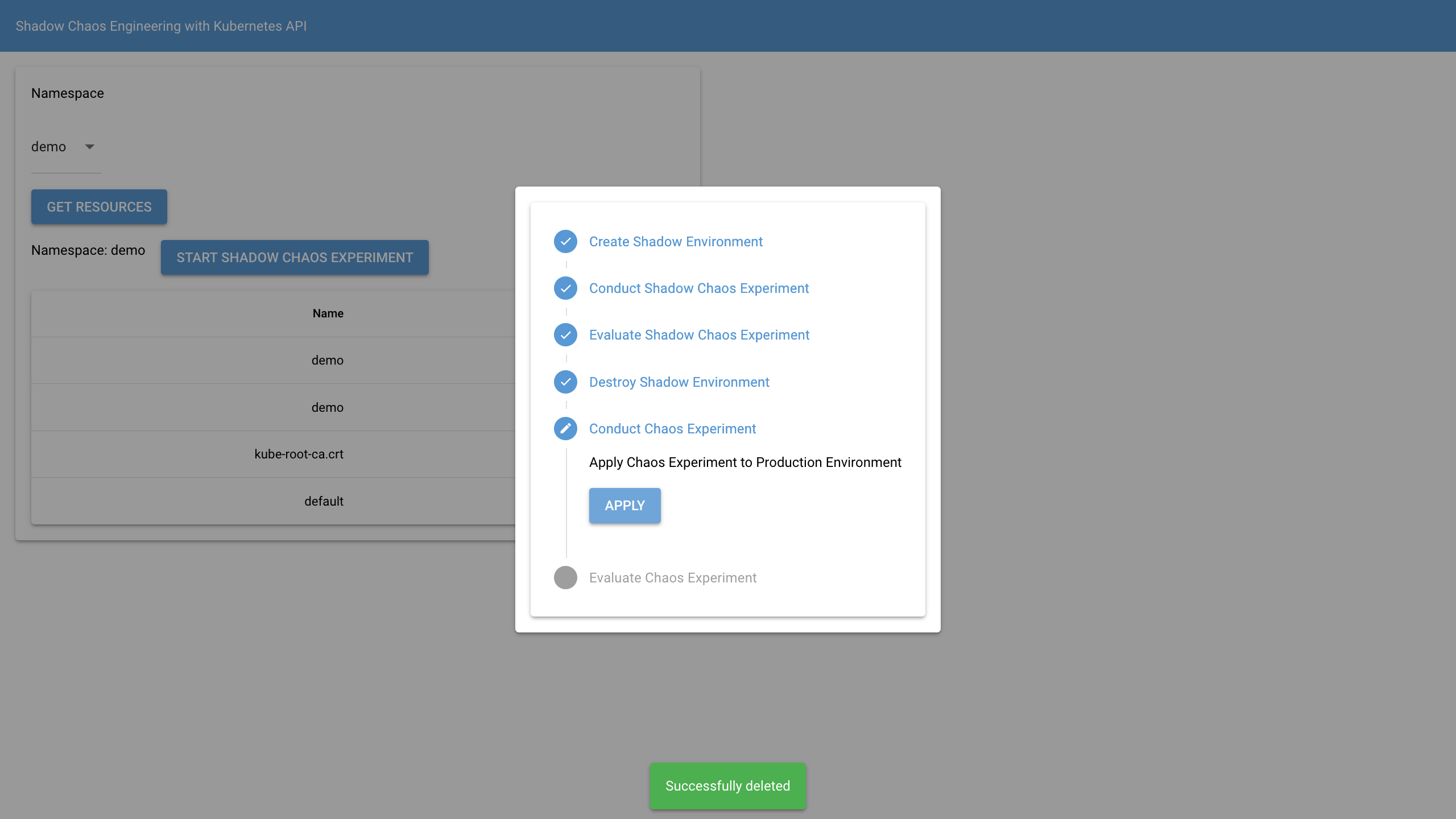
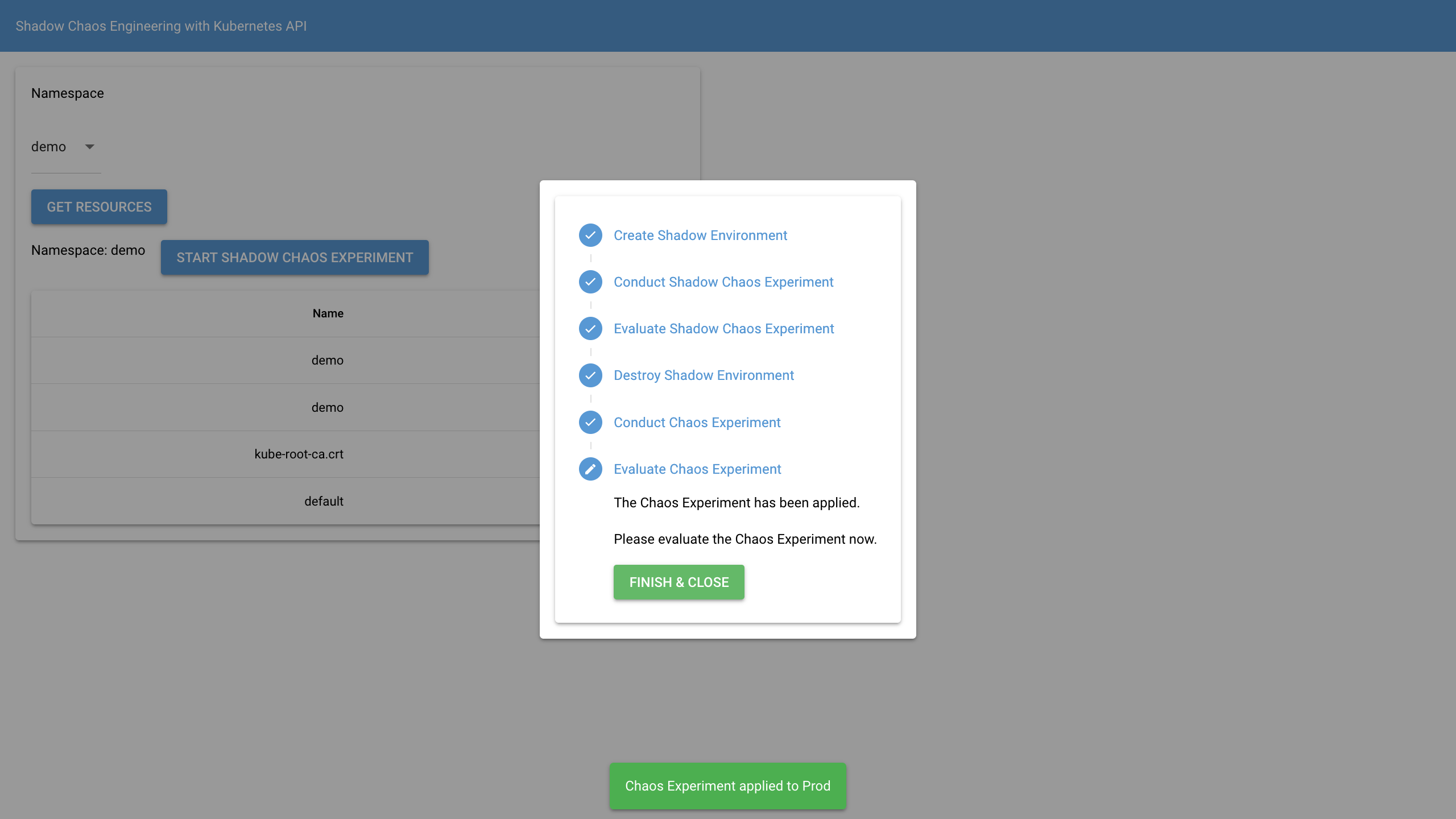
Demonstration
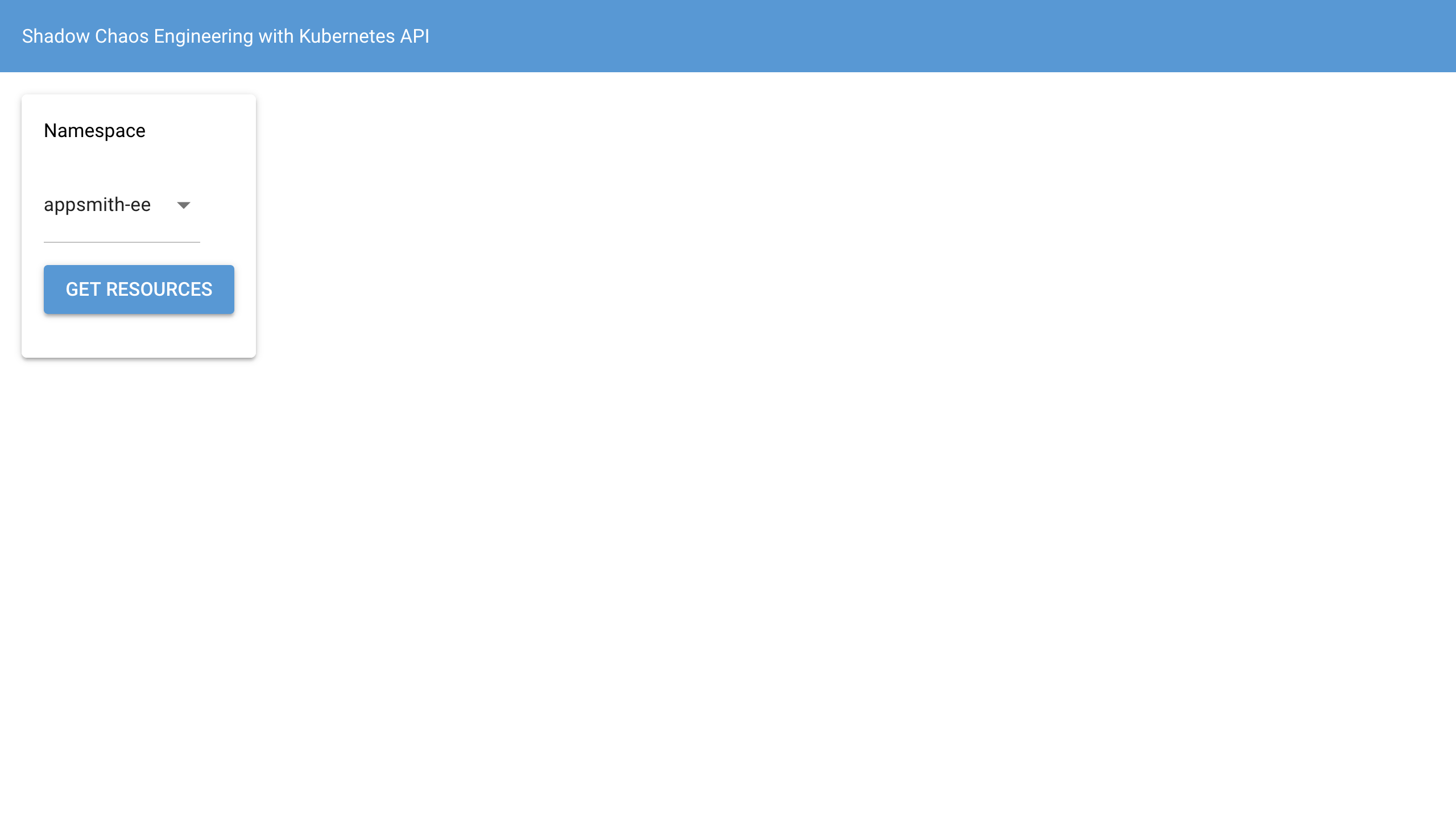
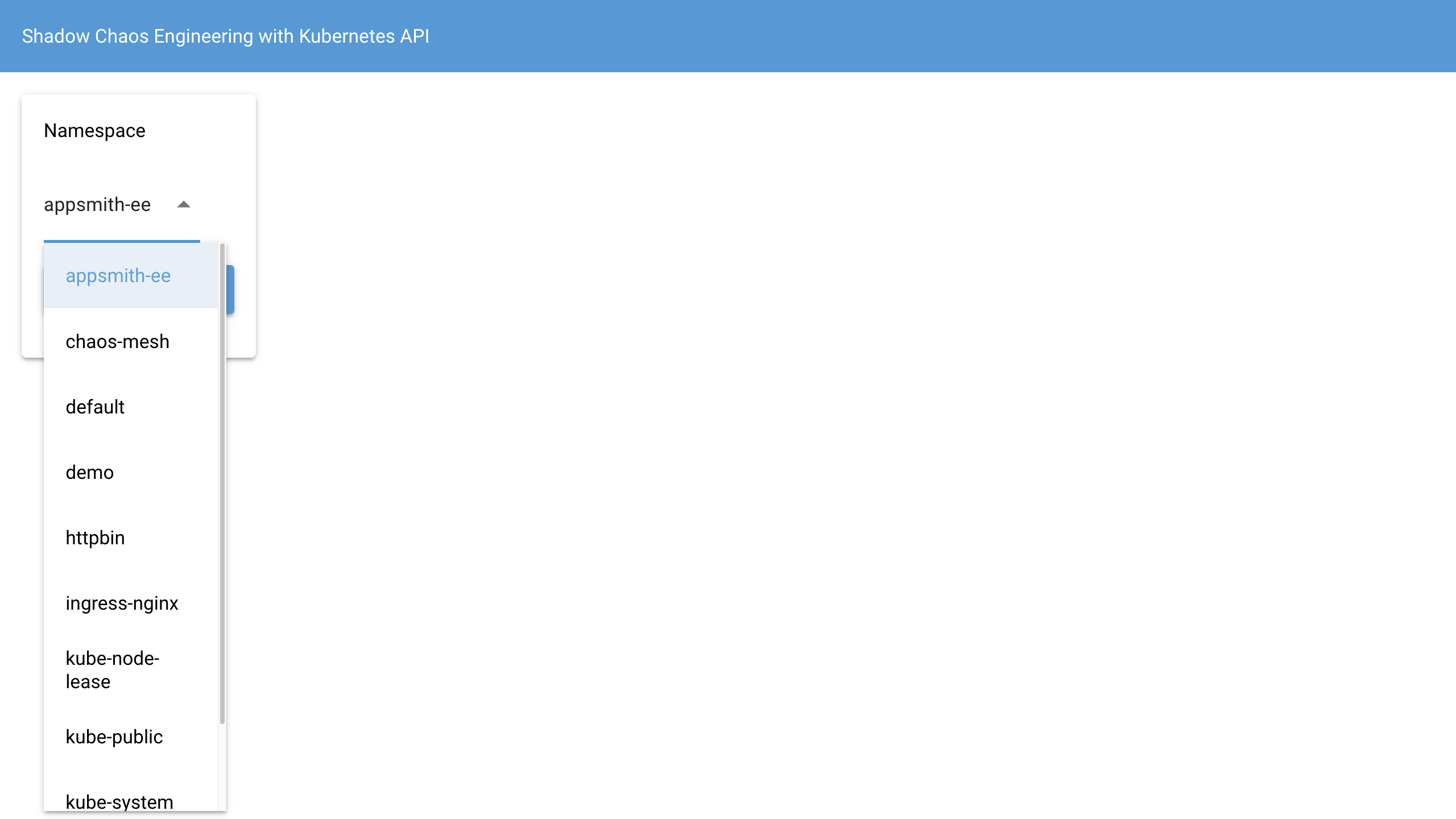
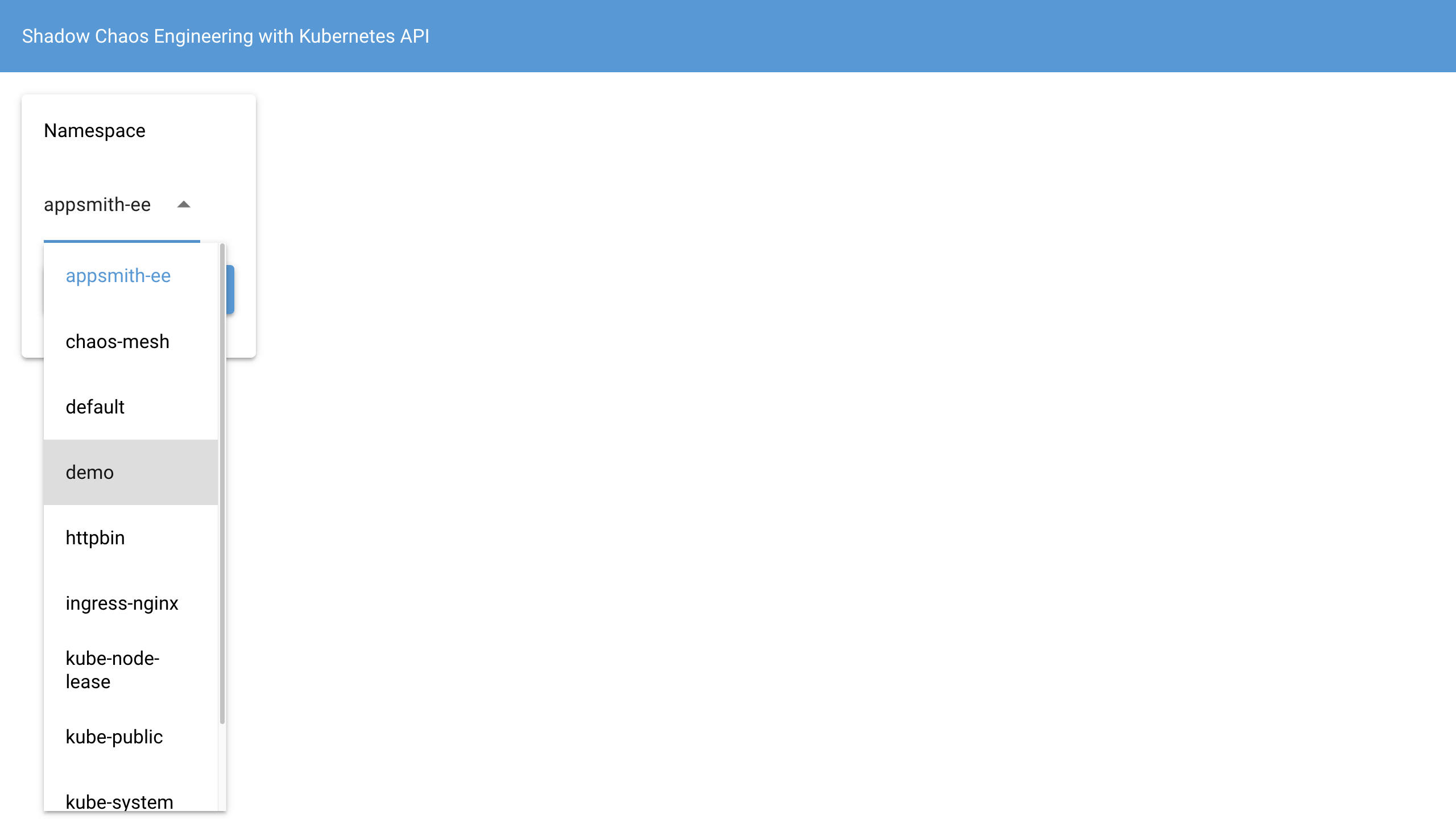
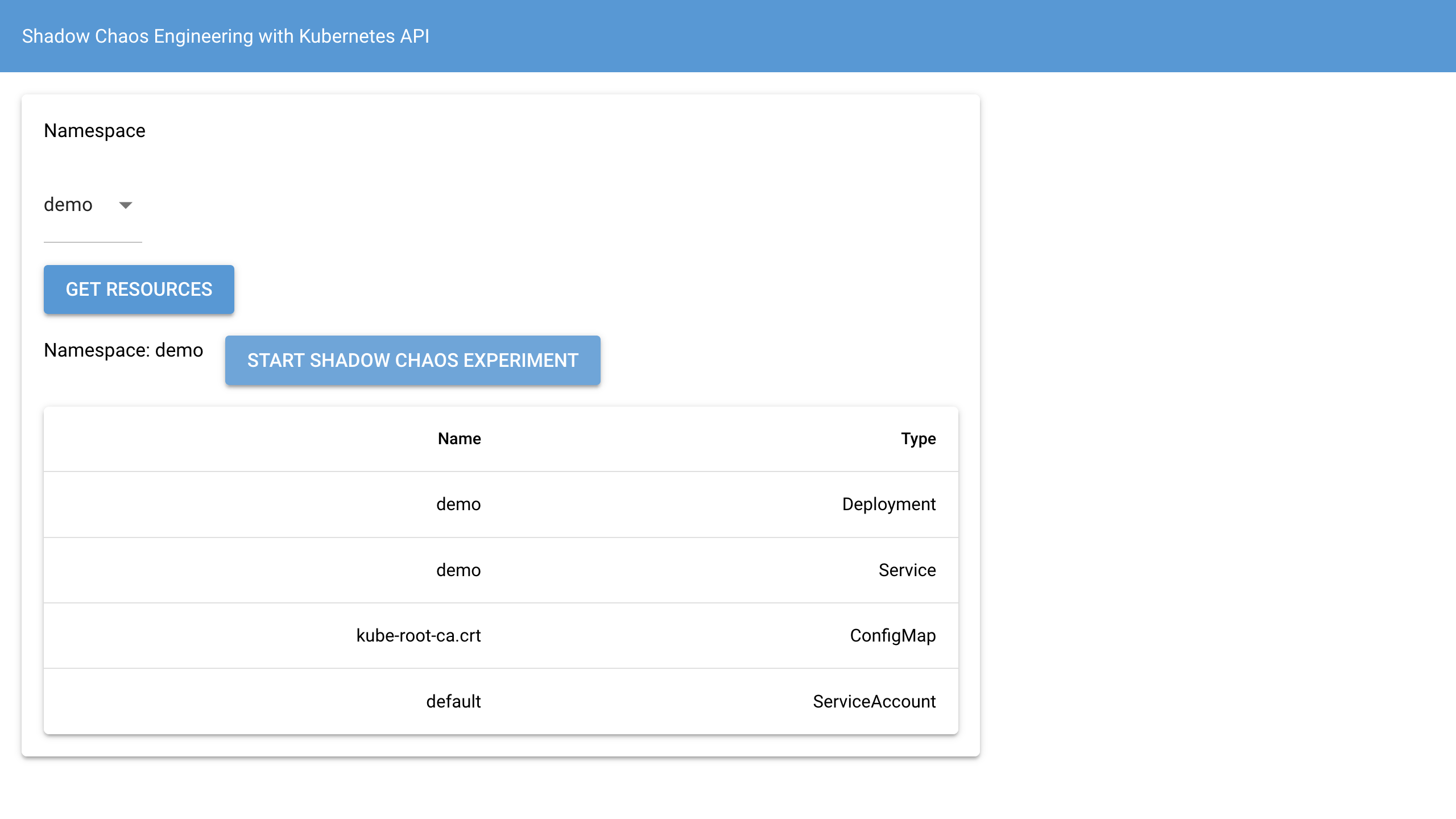
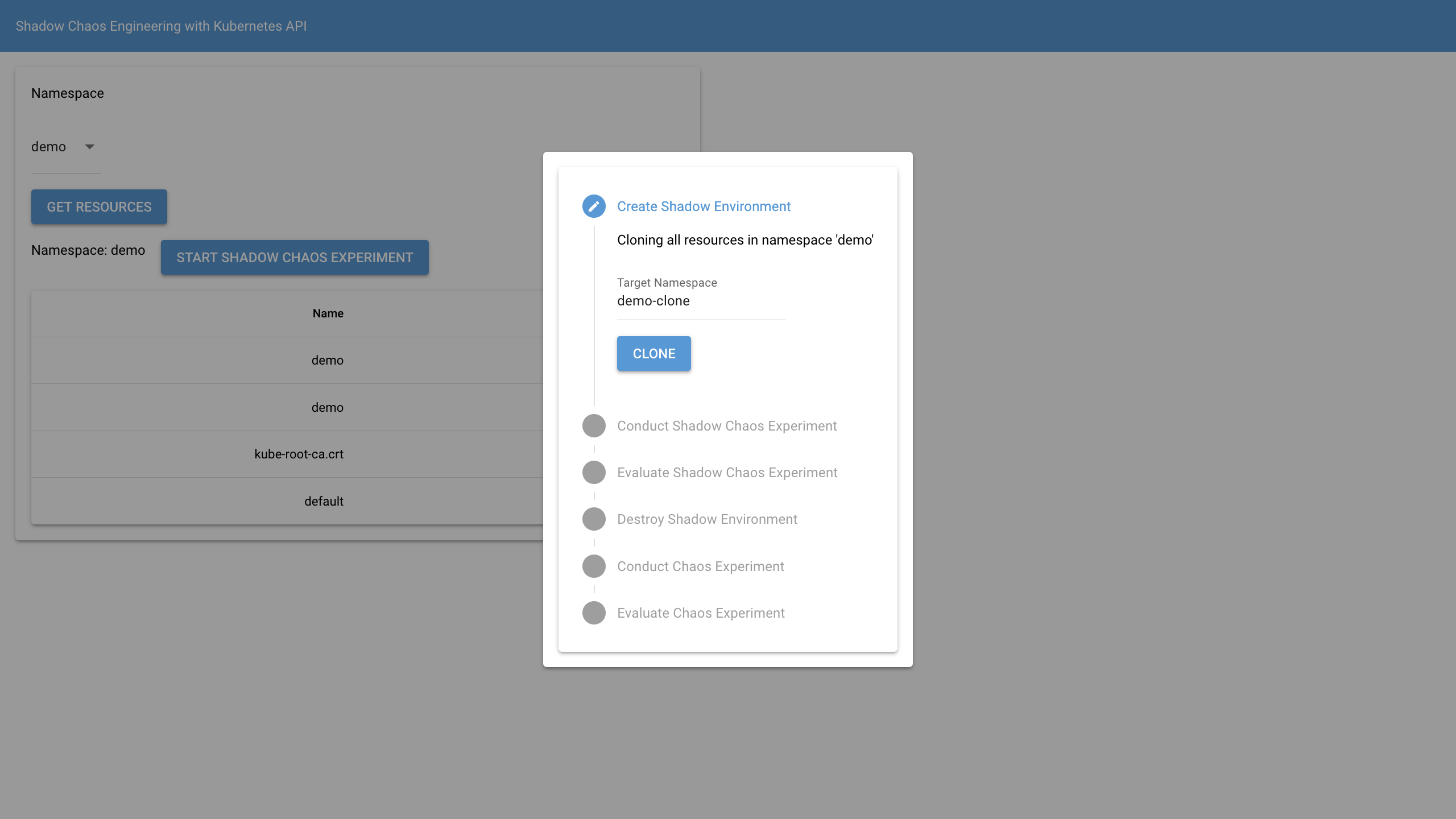
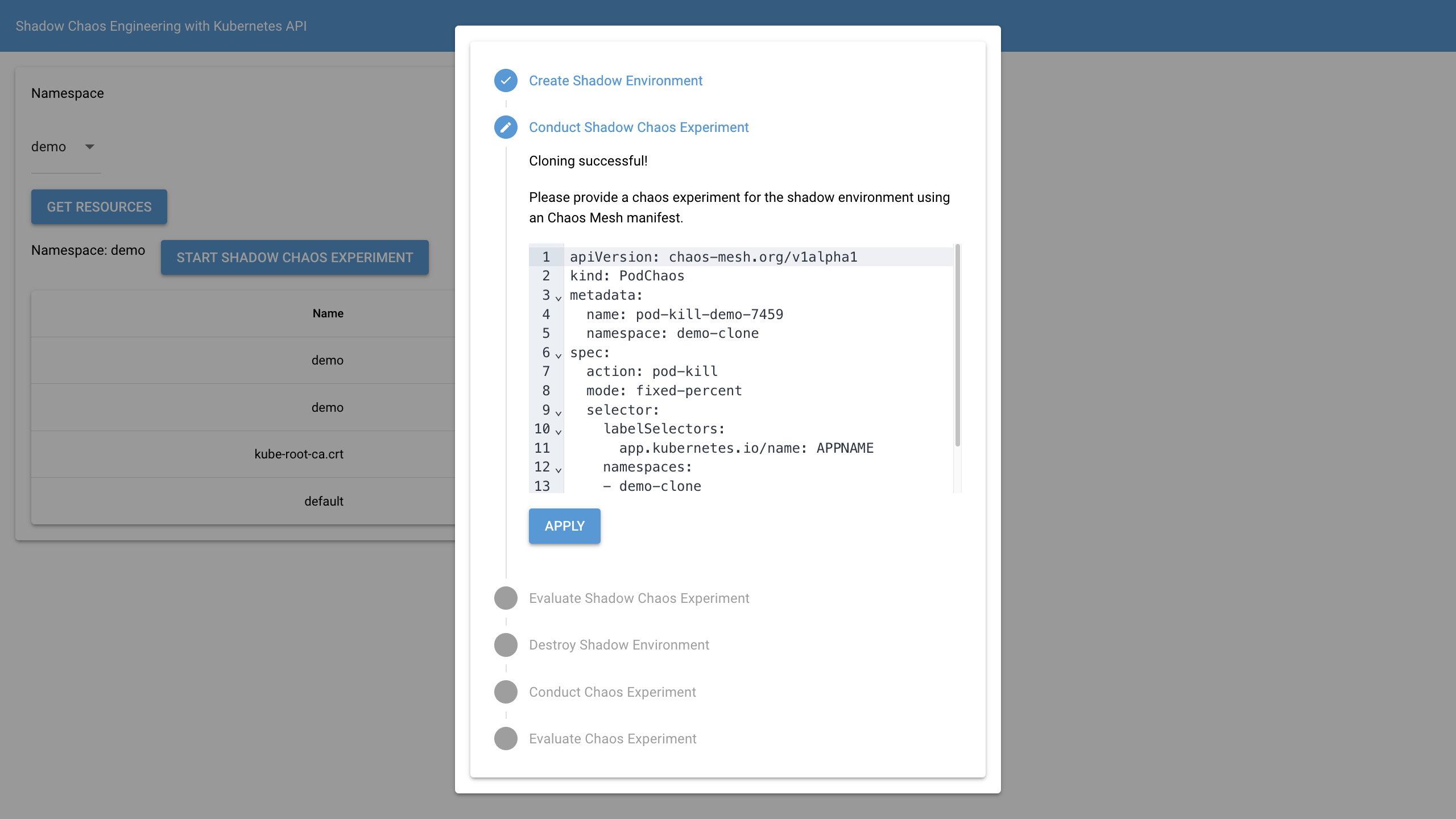
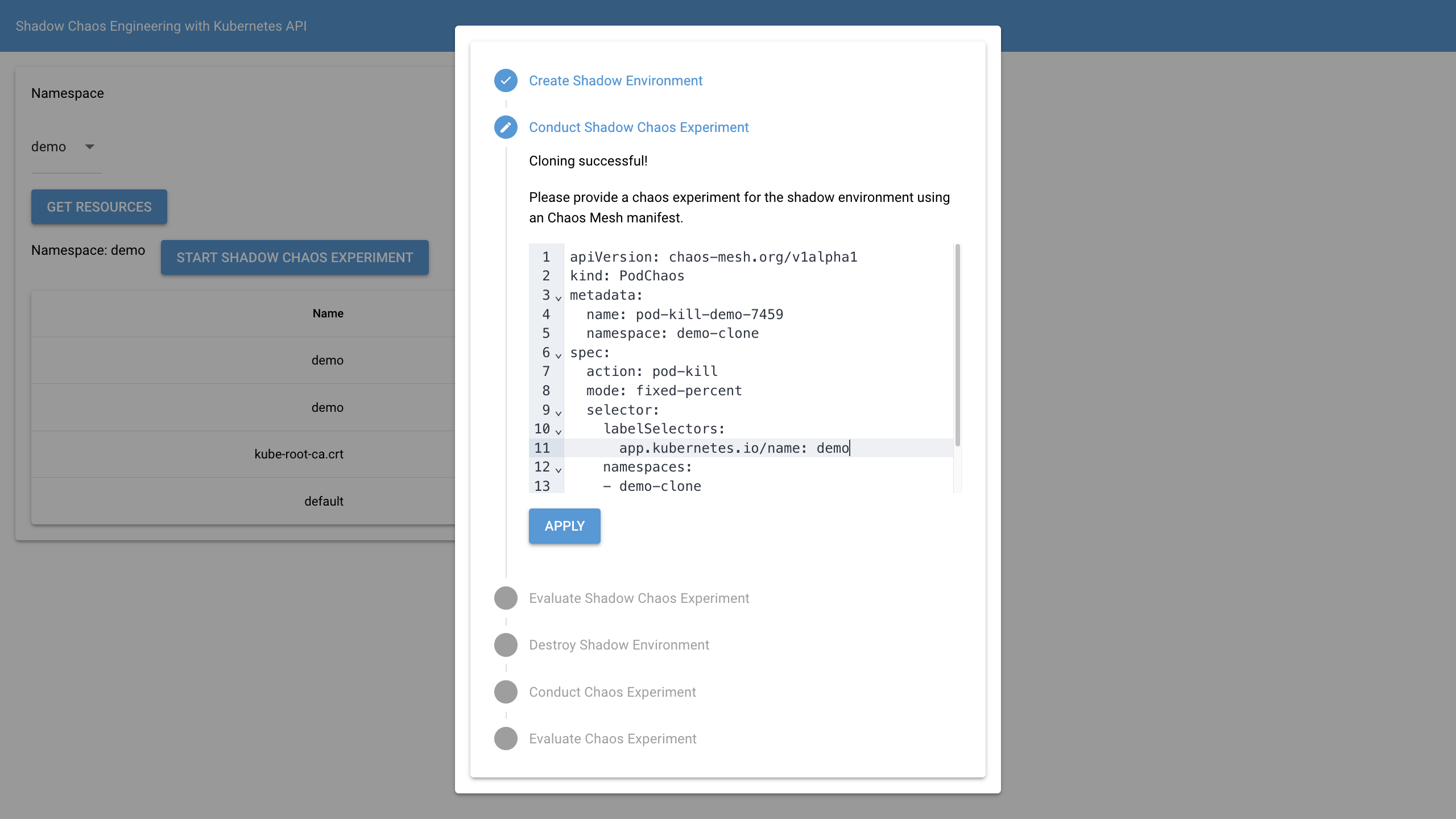
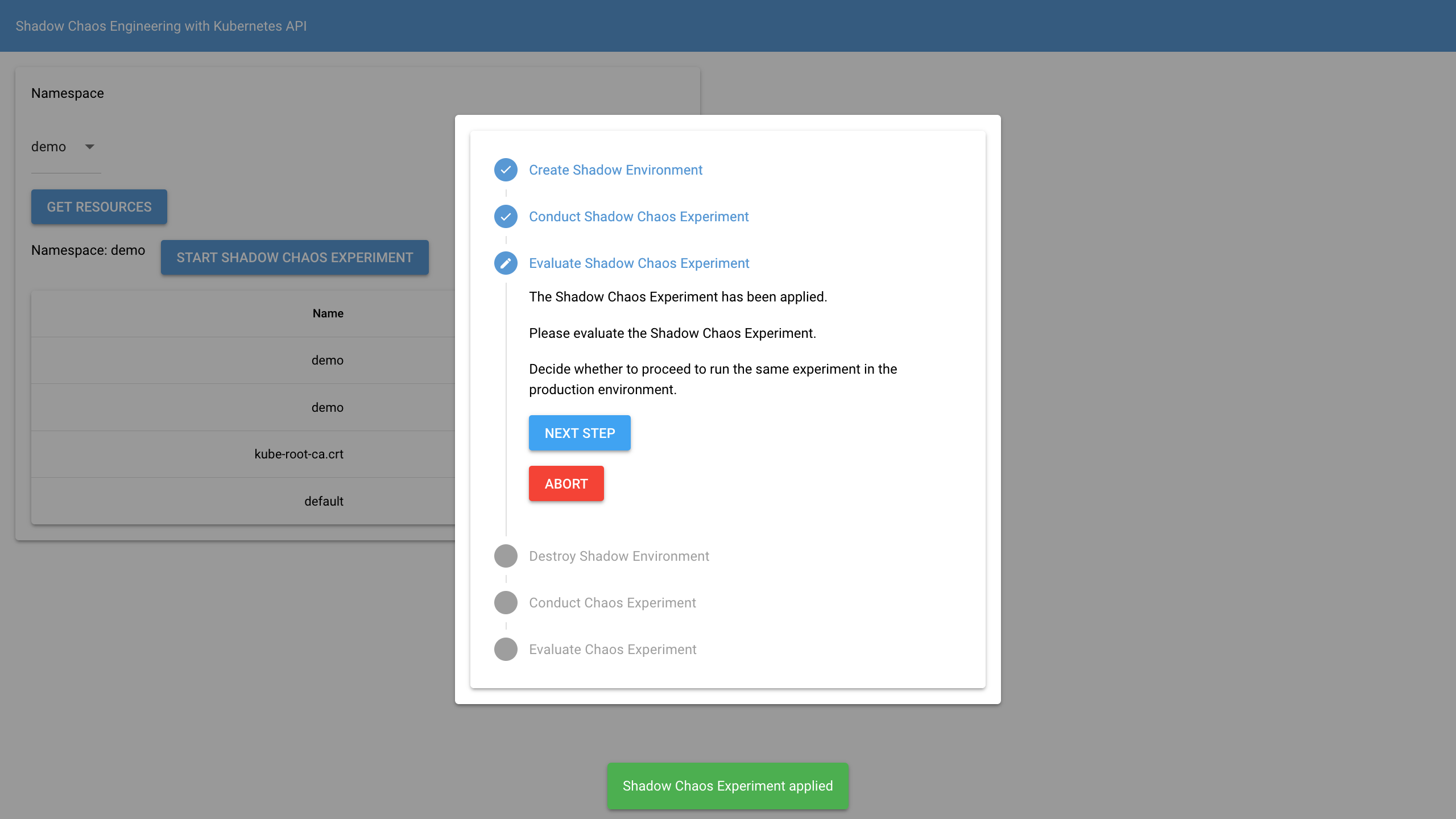
- Proof of concept
- Based on container orchestration system Kubernetes
- Partial automation of steps
Conclusion
Findings
- Shadow chaos engineering as new method for resilience testing
- Lowered risks with Shadow Chaos Engineering
- Proof of concept shows feasibility
- Partial automation possible
Conclusion
Future Work
- Evaluation of similarity between Shadow Environment and production environment
- Risk assessment of Shadow Chaos Engineering, compared to Chaos Engineering
- Risk assessment of Shadow Chaos Engineering, compared to Chaos Engineering
- Expand proof of concept to more resource types
- Explore new possibilities for automation [9]
- Experiment generation
- Experiment evaluation
References
[1]
Statistisches Bundesamt, “Nutzung von Cloud Computing nach Beschäftigtengrößenklassen.” Accessed: Oct. 14, 2024. [Online]. Available: https://www.destatis.de/DE/Themen/Branchen-Unternehmen/Unternehmen/IKT-in-Unternehmen-IKT-Branche/Tabellen/iktu-06-cloud-computing.html
[2]
A. Basiri et al., “Chaos Engineering,” IEEE Software, vol. 33, no. 3, pp. 35–41, 2016, doi: 10.1109/ms.2016.60.
[3]
Y. Sverdlik, “AWS Outage that Broke the Internet Caused by Mistyped Command.” Accessed: Oct. 14, 2024. [Online]. Available: https://www.datacenterknowledge.com/outages/aws-outage-that-broke-the-internet-caused-by-mistyped-command
[4]
K. Peffers, T. Tuunanen, M. A. Rothenberger, and S. Chatterjee, “A Design Science Research Methodology for Information Systems Research,” Journal of Management Information Systems, vol. 24, no. 3, pp. 45–77, Dec. 2007, doi: 10.2753/MIS0742-1222240302.
[5]
C. Rosenthal, L. Hochstein, A. Blohowiak, N. Jones, and A. Basiri, “Chaos engineering.” Accessed: Apr. 02, 2024. [Online]. Available: https://www.oreilly.com/content/chaos-engineering/
[6]
A. Basiri, L. Hochstein, N. Jones, and H. Tucker, “Automating Chaos Experiments in Production,” presented at the Proceedings - 2019 IEEE/ACM 41st International Conference on Software Engineering: Software Engineering in Practice, ICSE-SEIP 2019, 2019, pp. 31–40. doi: 10.1109/ICSE-SEIP.2019.00012.
[7]
F. Poltronieri, M. Tortonesi, and C. Stefanelli, “A Chaos Engineering Approach for Improving the Resiliency of IT Services Configurations,” 2022, pp. 1–6. doi: 10.1109/noms54207.2022.9789887.
[8]
H. Tucker, L. Hochstein, N. Jones, A. Basiri, and C. Rosenthal, “The Business Case for Chaos Engineering,” IEEE Cloud Computing, vol. 5, no. 3, pp. 45–54, 2018, doi: 10.1109/mcc.2018.032591616.
[9]
J. Hernandez-Serrato, A. Velasco, Y. Nifio, and M. Linares-Vasquez, “Applying Machine Learning with Chaos Engineering,” 2020, pp. 151–152. doi: 10.1109/issrew51248.2020.00057.